
Tariff Refunds: Who should really get these? The supplier or the consumer?
- Michael Timmons
- 1 day ago
- 4 min read

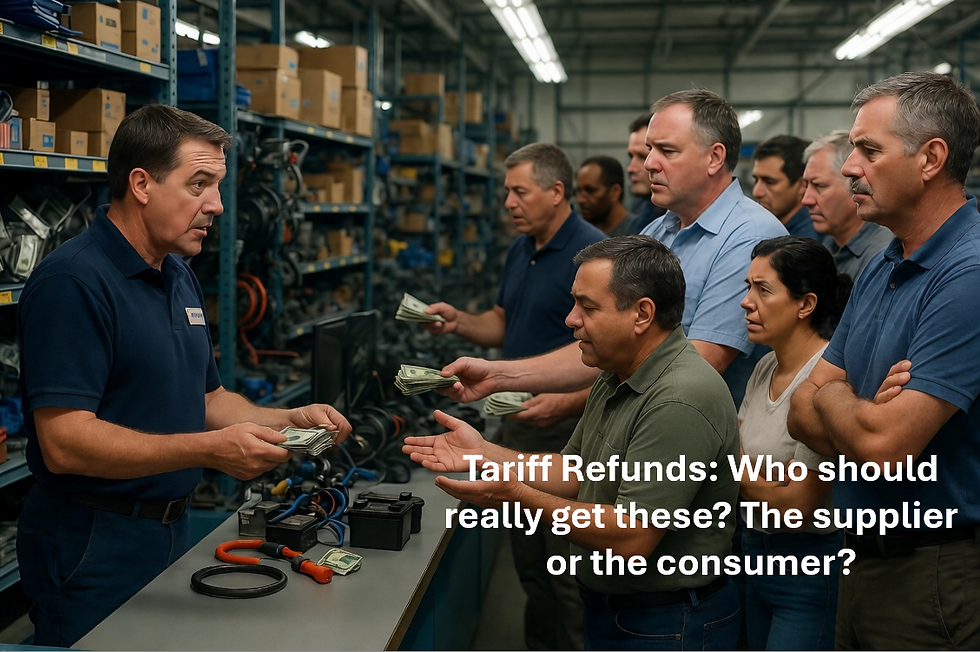
Tariffs function as taxes imposed on imported goods, paid directly by the importer of record. Typically, U.S. businesses or their customs brokers are at the border. Legally, the U.S. government collects these duties from the importer, not from foreign suppliers or end consumers. When tariffs rise, importers often respond by raising wholesale or retail prices to protect their margins, effectively passing much of the economic burden downstream.
Economic studies consistently show high pass-through rates for recent U.S. tariffs. In many cases, U.S. firms and consumers bore 85-96% of the cost through elevated prices, with foreign exporters absorbing only a small portion by lowering their pre-tariff prices. This dynamic means that everyday shoppers paid more for tariff-affected products like electronics, apparel, steel-based goods, and groceries without directly remitting any money to Customs and Border Protection (CBP).
In 2026, following a Supreme Court ruling that invalidated certain tariffs imposed under the International Emergency Economic Powers Act (IEEPA), the U.S. government began processing refunds of roughly $166 billion. These refunds go exclusively to the importers of record who originally paid the duties, often as a lump-sum electronic transfer via CBP's ACE portal. Consumers have no direct eligibility to file claims, even if they shouldered higher costs at checkout.
This legal structure creates a clear disconnect: the entity that wrote the check to the government receives the refund, regardless of who ultimately absorbed the economic hit. Importers are under no federal obligation to pass refunds downstream to retailers, distributors, or final customers. Contractual agreements in the supply chain may sometimes require sharing, but enforcement varies and often favors the party holding the importer-of-record status.
Suppliers and importers receiving these refunds gain a significant one-time windfall that bolsters their 2026 bottom line. The money arrives as essentially "found" revenue, often with interest, improving cash flow, profitability, and potentially executive bonuses or shareholder returns for the current fiscal year. Many companies have already signaled plans to retain the funds for operational needs rather than immediate price adjustments.
Looking ahead to 2027 budgeting, suppliers must account for the temporary nature of this boost. Refunds represent a reversal of past costs, not ongoing savings. Once processed, future imports may face different trade policies, renewed tariffs, or normal duty rates. Smart financial planning requires treating the influx as non-recurring, avoiding over-reliance on it for long-term projections or expanded spending that could strain operations when the money stops flowing.
From an equity perspective, the question arises: if suppliers raised prices specifically citing tariff costs, shouldn't refunds flow back to the consumers who paid those inflated amounts? The tariff burden fell disproportionately on households through higher retail prices, functioning like a regressive consumption tax that hit lower- and middle-income families hardest on everyday goods. Direct consumer rebates could restore purchasing power more fairly, yet current policy channels everything through businesses.
Some large retailers and importers, such as Costco, have publicly indicated they may use portions of refunds to offer lower prices or better value to customers. A few companies face consumer lawsuits seeking to compel sharing. However, surveys of chief financial officers suggest most firms plan to retain the funds internally, with no legal mandate forcing pass-through. This leaves the decision to corporate discretion and market pressures.
In my view, suppliers who previously implemented price increases tied to tariffs have both an ethical and strategic opportunity when refunds arrive. They could voluntarily offer a targeted Tariff Sale for a limited 10- to 30-day promotion providing 10% to 20% off on affected products. This gesture would acknowledge that much of the original tariff cost was ultimately borne by customers, returning value where it originated.
Such a Tariff Sale would serve as powerful marketing. In a competitive retail environment, transparency builds trust and customer loyalty. Announcing "We're passing our tariff refund savings directly to you" demonstrates corporate accountability and differentiates the supplier from competitors hoarding the windfall. It could drive immediate sales volume, clear inventory, and generate positive word-of-mouth during a period of economic sensitivity.
Implementing the sale requires careful execution: suppliers should clearly communicate the promotion's link to tariff refunds, limit it to previously tariffed items, and time it shortly after receiving funds to maximize impact. Even a modest discount percentage could offset a meaningful portion of the price hikes consumers experienced, while the short window creates urgency without permanently eroding margins.
Ultimately, tariff refunds highlight tensions in trade policy design. While the system correctly refunds the legal payer (the importer), it overlooks the diffuse economic incidence on consumers. Voluntary actions like short-term sales offer a market-driven bridge, giving suppliers a chance to align their bottom-line gains with consumer confidence. In 2026 and beyond, businesses that prioritize this fairness may find stronger long-term relationships and brand reputation outweigh the short-term appeal of retaining every dollar.
As refund processing continues through CBP's CAPE system, with many claims expected within 60-90 days, both suppliers and consumers will watch closely how the windfall is handled. True economic relief would ideally reach those who paid more at the register, whether through direct corporate initiatives or broader policy debates over consumer rebates. For now, the ball remains in suppliers' courts to decide if refunds truly "belong" to the businesses that paid them on paper or to the customers who funded them in practice.


Comments