
Why Fun in the Workplace Isn’t a Luxury, It’s a Competitive Advantage

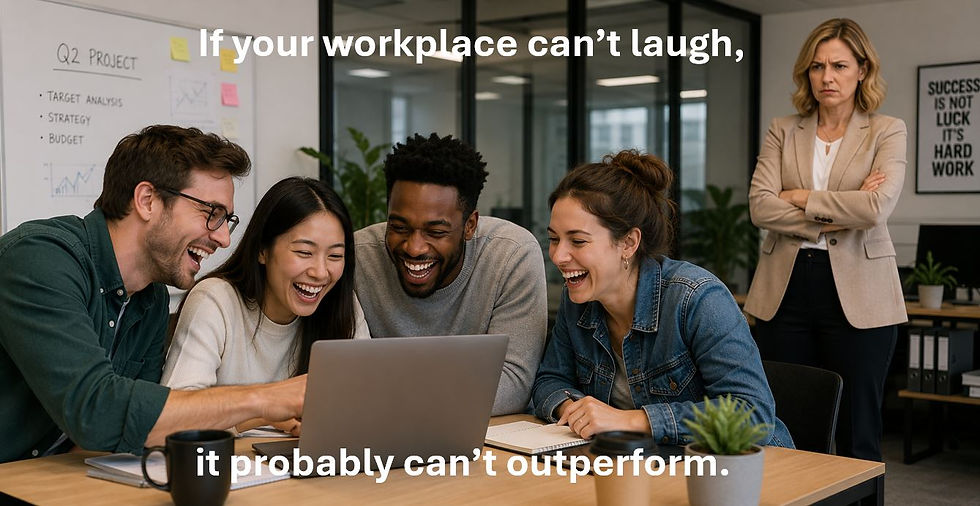
For decades, many old-school leaders viewed the workplace through a very rigid lens: work is for productivity, seriousness, and discipline. In their minds, laughter often signaled distraction. If employees were joking, smiling, or enjoying themselves, some leaders assumed they weren't focused on the job. The belief was simple: serious work requires serious people. While discipline and accountability certainly matter, this outdated mindset has created environments in which employees feel they are expected to check their personality at the door. The reality is that workplaces built solely on pressure, rules, and constant oversight often struggle with morale, retention, and long-term performance.
The truth is that fun in the workplace is not the enemy of productivity; it often fuels it. People perform better when they feel comfortable, engaged, and connected to the people around them. A workplace that allows for humor, creativity, and positive energy creates an environment where employees actually want to show up and contribute. Fun doesn't mean chaos or a lack of professionalism. It means creating moments when people can breathe, connect, and mentally recharge. When employees enjoy the atmosphere around them, they become more collaborative, innovative, and resilient under pressure.
When organizations eliminate fun from the workplace, culture suffers. Employees begin to feel like machines rather than people. Over time, this creates emotional fatigue, disengagement, and higher turnover. Teams stop communicating openly. Creativity declines because people become overly focused on avoiding mistakes rather than generating ideas. In these environments, stress dominates the culture. Employees may still complete tasks, but they do so without energy, passion, or loyalty. Eventually, this hurts the business because culture directly impacts performance, customer experience, and employee retention.
Many of the world's most successful companies recognized this years ago. Companies like Google, Salesforce, and HubSpot invested heavily in workplace culture by intentionally creating environments where people can enjoy coming to work. Whether it's collaborative workspaces, team-building activities, creative break areas, or simply a culture that encourages laughter and connection, these companies understand something important: employees do their best work when they feel energized. These organizations don't view fun as wasted time. They view it as an investment in performance, innovation, and retention.
There's also a scientific reason fun matters. Fun acts like medicine for the brain. Laughter reduces stress hormones like cortisol while increasing endorphins and dopamine, the chemicals associated with happiness, motivation, and reward. When employees laugh, connect socially, and experience positive emotions, their brains function better. They think more clearly, solve problems faster, and communicate more effectively. In high-pressure environments, even small moments of humor or shared enjoyment can reset mental fatigue and improve focus. This is why teams with strong camaraderie often outperform teams that operate in constant tension.
Fun in the workplace also builds stronger human connections. Employees who laugh together often trust each other more. Trust is one of the most important factors in building high-performing teams. When people feel connected, they communicate more openly, support one another during stressful periods, and work through challenges more effectively. This creates a culture where people are not just coworkers; they become teammates working toward a shared goal. Strong relationships inside an organization often become the difference between average teams and exceptional ones.
The workplace changed dramatically after the COVID-19 pandemic. Remote work, hybrid schedules, social distancing, and prolonged uncertainty reshaped workplace culture in ways many leaders are still trying to understand. Many offices became quieter, more transactional, and less connected. Casual conversations disappeared. Team energy declined. Human connection became harder to maintain. As employees returned to offices or adapted to hybrid environments, many realized something was missing. The spontaneous conversations, shared laughs, and social interactions that once made work enjoyable had faded. This shift made workplace culture more important than ever.
Today's leaders have a major opportunity. They can continue operating with outdated beliefs that treat fun as a distraction, or they can embrace a modern leadership approach that recognizes people perform best when they feel engaged, connected, and energized. Fun in the workplace isn't about avoiding hard work. It's about creating an environment where hard work feels sustainable. In today's business world, culture is no longer optional. Companies that understand the value of fun, laughter, and human connection will build stronger teams, healthier workplaces, and better long-term results. Sometimes the smartest thing a leader can do isn’t push harder, it’s create a workplace where people genuinely enjoy showing up.


Comments